


Restaurant Lighting Design: A Practical Guide
6 min reading time
6 min reading time
In a restaurant, lighting isn't decoration — it's part of the food, the mood and how long people want to stay. The same room can feel like a bright canteen at noon and an intimate dining room at night, and the difference is almost entirely light.
This guide walks through how to light a restaurant or bar the way a hospitality lighting designer would — the layers, the technical numbers that make food and faces look good, the scenes that carry the space from lunch to late night, and the mistakes that quietly hurt the experience (and the photos guests post).

Restaurants ask more of lighting than almost any other interior. It has to flatter food and skin, set a mood that matches the concept, guide guests and staff, and change through the day — all while surviving heat, grease and constant cleaning. Get it right and the room feels warm and considered; get it wrong and even great food looks flat.
As with any good scheme, the answer is layers — not one bright source, but several working together.
The general fill should be soft and dim, especially in the evening. Bright, even ceiling light kills atmosphere. Think wall washing, indirect cove light or low-output downlights — enough to move safely, not enough to flatten the room.
The most important layer. Pools of warm light on each table make food the hero and create the intimate "every table feels private" effect. Tight beams, low glare, and light aimed at the plate — not in guests' eyes.
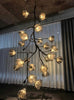
The chandelier over the bar, a cluster above the central table, a sculptural installation in the void. This is what guests photograph and what gives the venue its signature.
Bar, open kitchen, service stations and circulation need brighter, higher-CRI task light — balanced so it doesn't spill into the dining mood.
For the engineering side — photometrics, optics, IES files and controls — see our technical & architectural lighting page.

The feature fixture sets the tone. A few rules:
Browse reference pieces in our chandeliers and pendant lights collections — any can be adapted in size, finish and construction for your venue.
F&B is a tough environment. Favour durable, cleanable materials — solid brass, stainless steel, glass — and finishes specified to resist heat, grease and frequent wiping. A beautiful fixture that tarnishes or yellows in a year is a false economy.
Catalogue fixtures rarely fit a specific room's scale, concept or budget. Custom (or spec-adapted) lighting lets you match the design intent exactly, size the feature to the space and tune materials to the budget — while hitting hospitality-grade standards. At RODESIGNE we design and manufacture both decorative and technical lighting to spec, build from your reference or brief, produce samples in days, and deliver and install worldwide — from a single bar chandelier to the full hospitality lighting and FF&E package.
Lighting a restaurant, bar or hotel F&B space?
Send the renders, the drawings or the brief and we'll return a scope of supply, an estimate and a delivery schedule.
What colour temperature is best for a restaurant?
Warm — 2200–2700K over dining areas — for an intimate, appetising feel. Keep it consistent across fixtures.
What CRI should restaurant lighting have?
CRI 90+ anywhere food and drinks are seen, with good R9 so reds and meats render true.
How do you change the mood from lunch to dinner?
Dimming with pre-set scenes (DALI/TRIAC) — bright for service and cleaning, soft for dinner, dim for late night.
Can fixtures be made to a custom design and budget?
Yes. We manufacture from references and briefs, make samples for approval, and adapt size, finish and construction to the budget. See our hospitality lighting →


